2026-07-09 · Tom Keefe
How does pest control work?
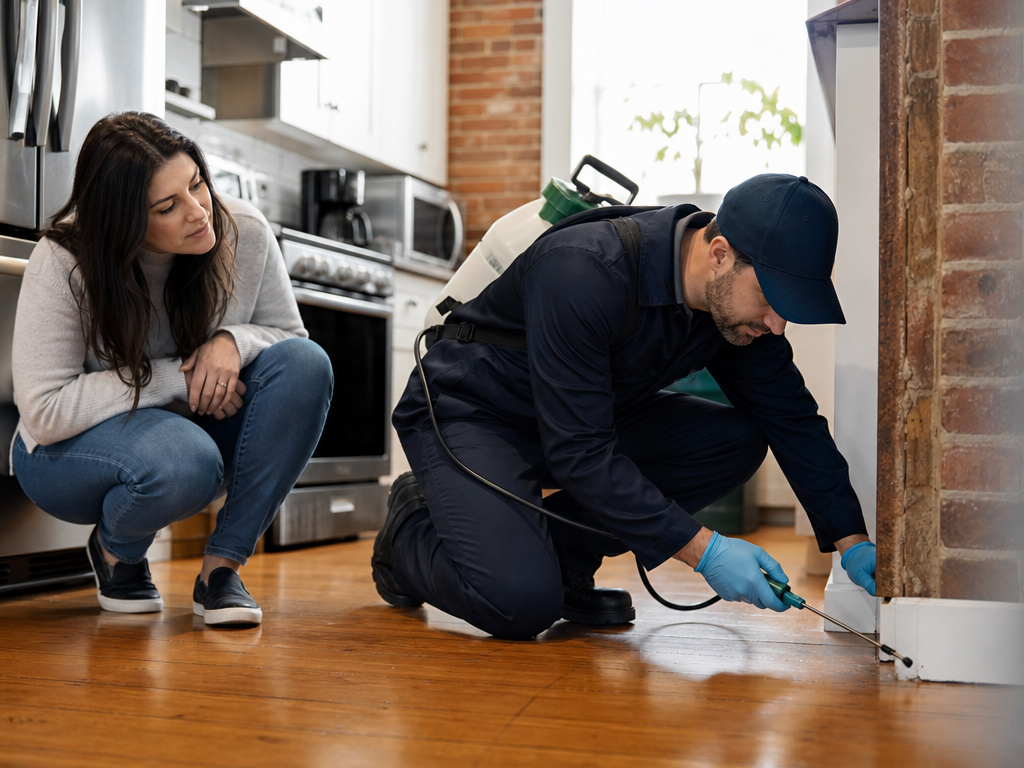
In Boston's humid continental climate moderated by the Atlantic Ocean, pest control works by first locating the pest species and its access points in older brick and wood-frame buildings common to Beacon Hill, Back Bay and the North End.
A technician begins with a detailed inspection of kitchens, basements and wall voids to confirm whether the issue involves ants, cockroaches, rodents or other household pests. This step determines whether gel baits, non-repellent sprays, insect growth regulators or dusts will be most effective.
Inspection and Identification
The process always starts with identifying the exact pest and its biology. For example, carpenter ants nest in moist wood while German cockroaches hide in warm voids near food sources. Accurate identification prevents wasted effort and guides the choice of treatment category.
Treatment Application
Once identified, treatments focus on the colony or population rather than individual insects. Gel baits and IGRs are placed in hidden harborages; non-repellent products are applied along travel routes; dusts reach voids; and exclusion seals gaps around pipes and foundations. Multiple visits spaced one to three weeks apart are usually required because eggs and hidden stages continue to emerge.
Safety and Limitations
Products are chosen and placed to minimize exposure in homes with children and pets. Food-prep surfaces are avoided and baits are secured inside stations. DIY methods can reduce light activity but often fail against established colonies or structural entry points in historic Boston housing.
When Professional Help Is Needed
For recurring problems or signs of structural damage, local pros apply integrated methods across the property. Household pest control services in Boston combine the steps above with ongoing monitoring suited to Suffolk County conditions.