Wakefield's humid continental climate produces clear seasonal pest patterns. Spring termite swarms emerge around crawlspaces in older homes, summer mosquitoes and wasps build around Lake Quannapowitt and Common Ground, and fall rodent pressure rises as temperatures drop and mice move indoors from wooded edges.
Here's how our groundhog removal work runs in Wakefield — the same standards we hold across Massachusetts, delivered by the crew that covers Middlesex.
Groundhog Removal Services We Offer in Wakefield
✓Live Trapping and Relocation
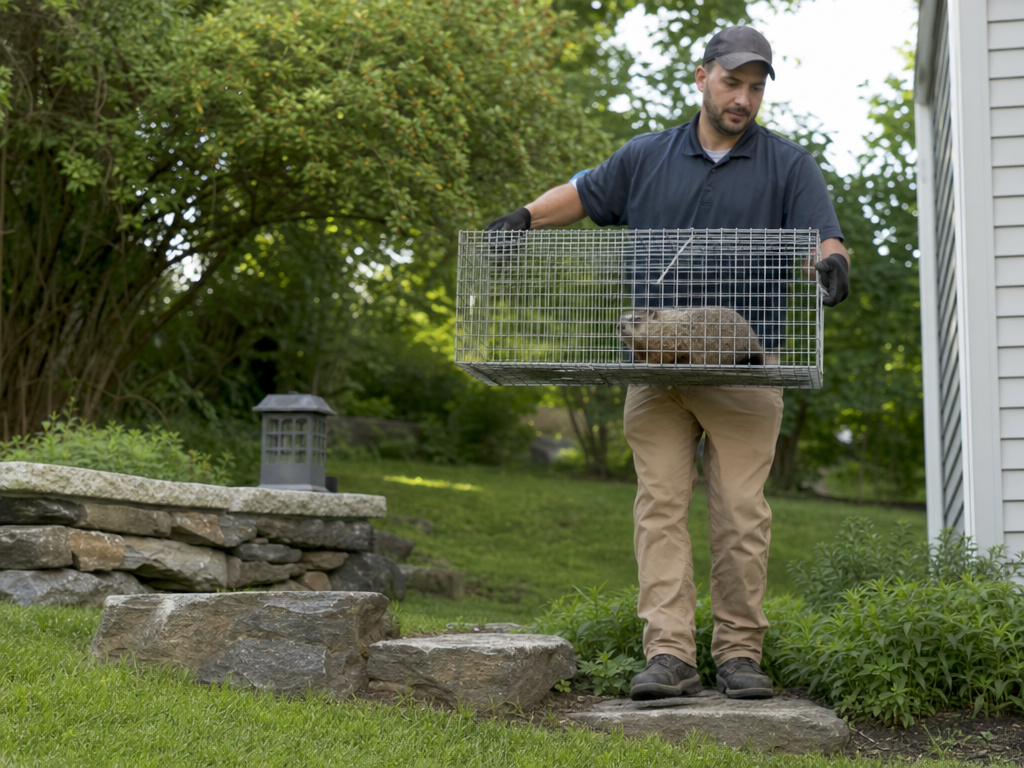
Single or multiple cage traps placed along active runways with daily checks to remove groundhogs without harm before transporting to approved release sites.
✓Burrow Exclusion and Sealing
Locate all entrances, install buried wire mesh barriers, and backfill tunnels to stop re-colonization on residential lots in Dorchester and Roxbury.
✓Perimeter Fencing Installation
Install 3-foot buried fencing with outward-facing aprons around gardens and foundations in Beacon Hill and South Boston to block digging access.
✓Attic and Crawlspace Inspection
Check for groundhog entry into structures near Fenway Park and Allston, document damage, and provide written findings for insurance or real-estate needs.
✓Habitat Modification Service
Remove food sources and cover potential den sites on commercial properties along the Freedom Trail corridor to reduce future groundhog activity.
✓Recurring Monitoring Program
Quarterly site visits with trap resets and perimeter checks for multi-family buildings in Brighton to maintain long-term control.
Groundhogs in Suffolk County dig extensive burrow systems that undermine foundations, patios, and retaining walls, especially in areas with the humid continental climate moderated by the Atlantic where spring thaws soften soil around Boston Common and the Public Garden. We assess entry points near fences, decks, and garden beds in neighborhoods like Back Bay, Jamaica Plain, and Charlestown before setting properly sized live traps baited with fresh produce or alfalfa.
Massachusetts regulations require humane handling; we avoid lethal methods unless a health department order is in place and always check for dependent young before closing burrows. After capture, we seal openings with heavy-gauge wire mesh buried 12-18 inches and topped with gravel to prevent re-entry, then recommend removing attractants such as low-hanging fruit trees and unsecured compost.
How It Works in Wakefield
- 1
Site Inspection
Walk the property to map burrows, runways, and damage while noting proximity to landmarks like Boston Harbor or Faneuil Hall.
- 2
Trapping Setup
Place and bait live traps in active locations, secure them against tampering, and schedule daily monitoring visits.
- 3
Capture and Removal
Check traps each morning, humanely handle animals, and transport to approved rural release locations outside Suffolk County.
- 4
Exclusion Work
Seal all identified entrances with mesh and gravel, then advise on vegetation changes to prevent new activity.
- 5
Follow-Up Visit
Return within 10-14 days to confirm no new digging and adjust barriers if needed.
Serving All of Wakefield
We regularly handle groundhog removal jobs near:
- 📍Lake Quannapowitt
- 📍Wakefield Town Hall
- 📍Common Ground
Groundhog Removal Pricing in Wakefield
Pricing varies by property size, number of burrows, and access difficulty. We provide upfront quotes after inspection.
Want the full picture of this service? See our Groundhog Removal page, or everything we do in Wakefield, MA.