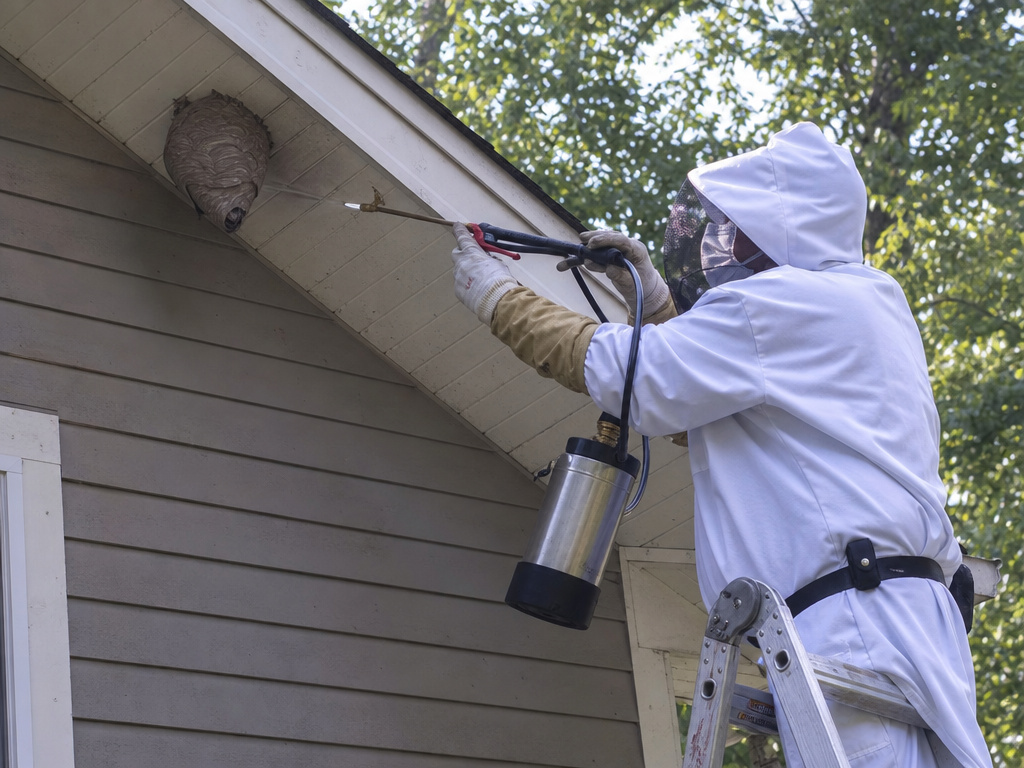
Yellow jackets in Suffolk County build ground nests near Boston Common and Fenway Park as well as wall-void colonies in older Beacon Hill and North End buildings. The Atlantic-moderated humid climate keeps colonies active into late October, so we treat both active foragers and the queen cells that produce next year’s workers.
We locate entry points with a UV flashlight and listening device, then apply a dust labeled for vespids directly into the nest chamber. When the nest sits behind brick or plaster we create a small access port rather than flooding the wall with liquid that can stain historic interiors.
Yellow Jacket Removal Near You — Choose Your City
Every city below has its own local Yellow Jacket Removal page with coverage details.
Middlesex
Worcester County
Worcester
Barnstable County
Middlesex County
Norfolk
Barnstable
Plymouth County
Essex County
Essex
Berkshire County
Hampshire County
Norfolk County
Hampden County
Franklin
Bristol
Berkshire
Plymouth
Franklin County
Hampden
Bristol County
Suffolk
Hampshire
Suffolk County
Dukes
Dukes County
Nantucket
Ground nests under decks in South Boston or Jamaica Plain require a different approach: a low-pressure injection followed by a temporary mesh cover to prevent re-entry while the colony collapses. We never use gasoline or other flammables that violate Massachusetts pesticide regulations.
After the nest is eliminated we seal the original entry with stainless-steel mesh and exterior caulk rated for coastal freeze-thaw cycles. Homeowners in Charlestown and East Boston receive a follow-up visit at no extra charge if foragers return within 30 days.
Yellow Jacket Removal Services We Offer
✓Ground Nest Yellow Jacket Removal
Locates and treats subterranean colonies common in Boston yards and parks using labeled dust injected directly into the nest entrance.
✓Wall Void and Attic Colony Extraction
Removes established yellow jacket nests inside Beacon Hill brownstones and multi-story buildings without flooding insulation or damaging plaster.
✓Commercial Kitchen Yellow Jacket Control
Targets nests near loading docks and dumpster areas that attract workers to restaurant kitchens in the South End and North End.
✓Multi-Family Building Yellow Jacket Management
Coordinates treatment across units in Dorchester and Roxbury triple-deckers while notifying property managers and minimizing resident disruption.
✓Emergency Yellow Jacket Nest Removal
Same-day response for aggressive nests near play areas, patios, or entryways in Allston, Brighton, and Charlestown.
✓Preventive Yellow Jacket Barrier Treatment
Applies residual perimeter treatment around foundations and eaves in late spring to stop new queens from establishing colonies near Boston Harbor properties.
How it works
- 1
Site Inspection
Technician examines the property during daylight hours using a UV light and listening device to pinpoint nest location and activity level.
- 2
Targeted Treatment
Dust or gel is applied directly into the nest chamber; foraging workers carry material back, collapsing the colony within 24–48 hours.
- 3
Nest Removal and Sealing
Once activity ceases the nest is extracted when accessible and all entry points are sealed with mesh and exterior-grade caulk.
- 4
Follow-Up Visit
Return visit scheduled within 30 days to confirm elimination and address any secondary nests that may have been hidden.
Pricing
Cost depends on nest location, height, and building access; Beacon Hill and brownstone work typically runs higher than ground nests in yards.