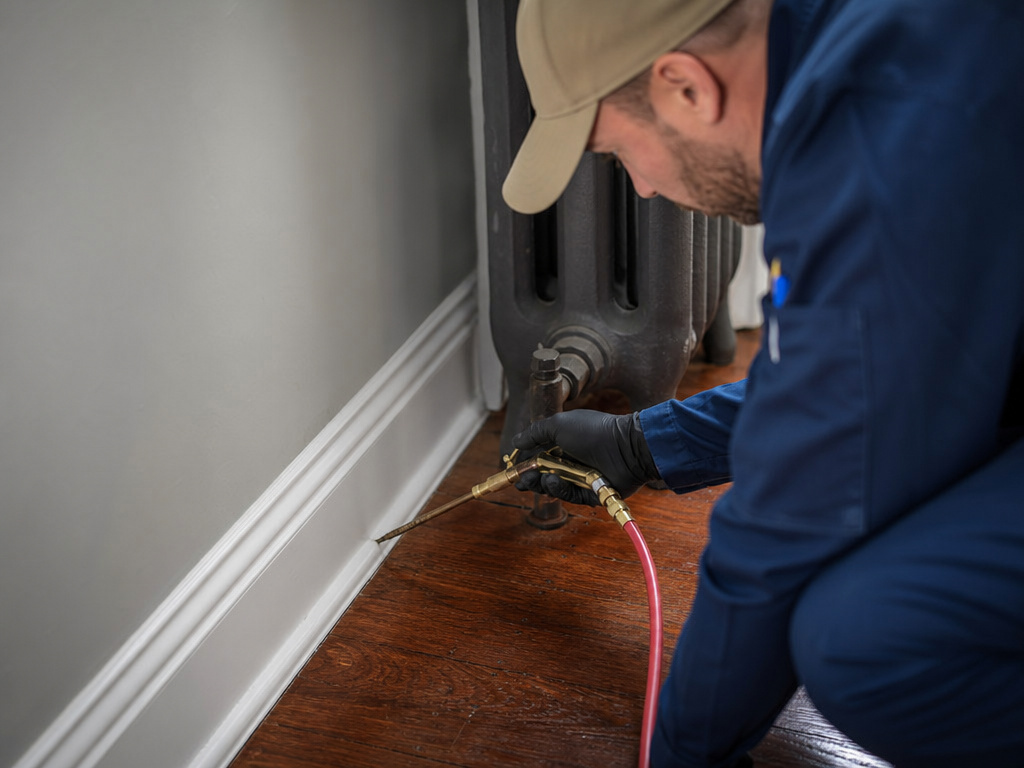
Boston's older brick and timber buildings in Beacon Hill, Back Bay, and the North End sit on soils that stay moist from Atlantic moderation, creating ideal conditions for subterranean termites to tunnel upward through foundations. We use non-repellent liquid termiticides applied to soil and voids plus bait stations monitored on a schedule because these colonies can extend 200 feet or more from the main nest.
Drywood termites occasionally appear in imported wood or older window frames in South End and Jamaica Plain row houses; they require different tactics such as targeted borate dusts or localized fumigation rather than soil barriers. Massachusetts building codes and real-estate transfer rules often call for a Wood-Destroying Insect report before sale, and our inspections document active galleries versus old damage so owners know exactly what needs treatment.
Termite Control Near You — Choose Your City
Every city below has its own local Termite Control page with coverage details.
Middlesex
Worcester County
Worcester
Barnstable County
Middlesex County
Norfolk
Barnstable
Plymouth County
Essex County
Essex
Berkshire County
Hampshire County
Norfolk County
Hampden County
Franklin
Bristol
Berkshire
Plymouth
Franklin County
Hampden
Bristol County
Suffolk
Hampshire
Suffolk County
Dukes
Dukes County
Nantucket
Historic masonry limits drilling options on many Beacon Hill and Charlestown properties, so we favor exterior trenching with rodding and interior void treatments that avoid visible alterations. We schedule around the shorter winter activity window created by our continental climate and always leave bait stations in place for ongoing colony elimination rather than promising one-visit eradication.
Termite Control Services We Offer
✓Subterranean Termite Bait Station Installation
Placement of monitored bait stations around the foundation perimeter to intercept foraging colonies before they reach structural timbers in Boston row houses.
✓Liquid Termiticide Barrier Treatment
Trench-and-rod application of non-repellent termiticide to soil adjacent to foundations and utility entry points common in Back Bay and South End buildings.
✓Drywood Termite Localized Treatment
Direct injection of borate dusts or foams into active galleries inside window frames and roof timbers without full-structure tenting.
✓Wood-Destroying Insect Inspection and Report
Detailed visual and probing inspection producing a WDO report required for Massachusetts property transfers in Suffolk County neighborhoods.
✓Multi-Family Termite Management Program
Coordinated baiting and monitoring across multiple units in Dorchester and Roxbury apartment buildings to stop colony movement between floors.
✓Preventive Termite Barrier for Renovations
Pre-construction soil treatment and post-renovation void sealing for additions or gut rehabs in historic Charlestown and East Boston properties.
How it works
- 1
Initial Inspection
Thorough interior and exterior examination of accessible wood, foundation, and moisture entry points with moisture meter readings and probing of suspect timbers.
- 2
Treatment Plan
Selection of bait stations, liquid barriers, or targeted drywood methods based on species, property construction, and proximity to Boston Common or waterfront humidity.
- 3
Application
Precise placement of products while protecting landscaping and avoiding disruption to historic masonry or occupied spaces.
- 4
Monitoring and Follow-Up
Scheduled station checks and re-inspection at 30-90 days to confirm colony decline and adjust stations as needed.
Pricing
Cost depends on property age, square footage, and whether the infestation is active subterranean or drywood; an on-site inspection determines the exact scope.