East Bridgewater sits in Plymouth County with a humid continental climate that brings cold snowy winters and warm summers, creating clear pest cycles. Spring termite swarms appear around older crawlspace homes in East Bridgewater Center and Elmwood while summer brings mosquito and wasp pressure near the Town Common and Sachem Rock Farm. Fall rodent activity spikes as mice and rats push indoors when temperatures drop along MA-18 and MA-106 corridors.
Here's how our wildlife damage repair work runs in East Bridgewater — the same standards we hold across Massachusetts, delivered by the crew that covers Plymouth County.
Wildlife Damage Repair Services We Offer in East Bridgewater
✓Squirrel Attic Entry Sealing
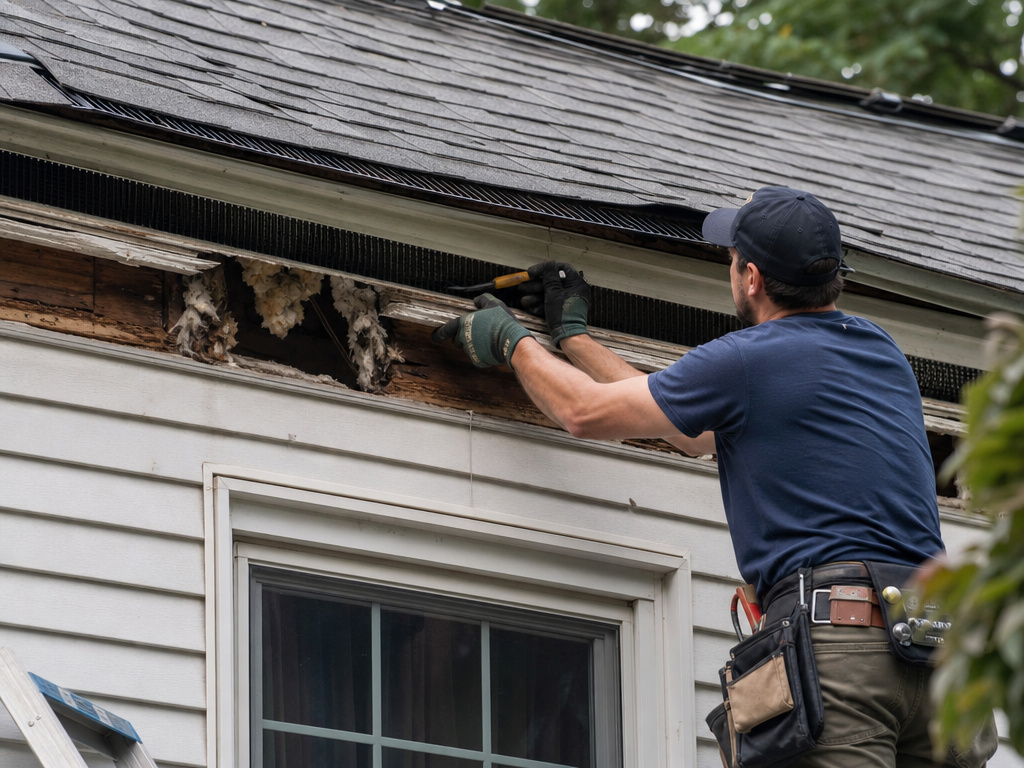
Remove chewed fascia and install galvanized metal flashing plus 1/4-inch mesh at all roofline penetrations common in Beacon Hill and Back Bay homes.
✓Raccoon Soffit and Chimney Repair
Replace damaged aluminum soffit panels and install chimney caps rated for Boston's high winds after raccoon eviction in multi-story South End and Dorchester properties.
✓Bat Exclusion and Insulation Replacement
One-way exclusion devices followed by removal of contaminated fiberglass and installation of new cellulose in Charlestown and North End historic ceilings.
✓Bird Nest and Dropping Cleanup
Safe removal of pigeon and starling nests from gutters and ledges plus HEPA vacuuming and antimicrobial treatment of affected masonry near Faneuil Hall and Boston Common buildings.
✓Rodent Gnaw Damage Restoration
Repair of baseboards, wiring conduit and subfloor damage in Allston and Brighton multi-family units caused by persistent Norway rat activity.
✓Wildlife Damage Inspection and Documentation
Detailed written report with photos and repair recommendations for insurance claims on properties throughout Jamaica Plain, Roxbury and East Boston.
Boston's humid continental climate moderated by the Atlantic creates constant moisture cycling that turns wildlife chew holes into rot and mold problems inside Beacon Hill brownstones and Back Bay row houses. We assess rooflines, cornice returns, and masonry gaps where squirrels and raccoons exploit the freeze-thaw cycle, then replace compromised sheathing and flashing with exterior-grade plywood and copper step flashing rated for coastal exposure.
Historic structures in the North End and Charlestown often have original lath-and-plaster that must be preserved; we use breathable vapor-open membranes and lime-based insulation patches rather than closed-cell foam that traps moisture against 200-year-old timbers. All work follows Massachusetts wildlife handling rules that prohibit disturbance of protected bat colonies between May and August, requiring us to schedule exclusion and repair outside those windows.
How It Works in East Bridgewater
- 1
Site Inspection
We examine all potential entry points from the roof to the foundation, noting active sign and any protected species presence before quoting.
- 2
Animal Removal Coordination
Live trapping or one-way doors are set only after confirming no dependent young remain inside the structure.
- 3
Structural Repair
Damaged sheathing, flashing and insulation are replaced with materials selected for Boston's salt air and freeze-thaw conditions.
- 4
Final Sealing and Follow-Up
All openings are secured with metal mesh and caulk; a 30-day re-inspection confirms no new activity before final sign-off.
Serving All of East Bridgewater
We regularly handle wildlife damage repair jobs near:
- 📍East Bridgewater Town Common
- 📍Sachem Rock Farm
- 📍East Bridgewater Center
- 📍Elmwood
Wildlife Damage Repair Pricing in East Bridgewater
Upfront written quotes after on-site inspection; final price depends on extent of hidden damage and access difficulty in historic buildings.
Want the full picture of this service? See our Wildlife Damage Repair page, or everything we do in East Bridgewater, MA.